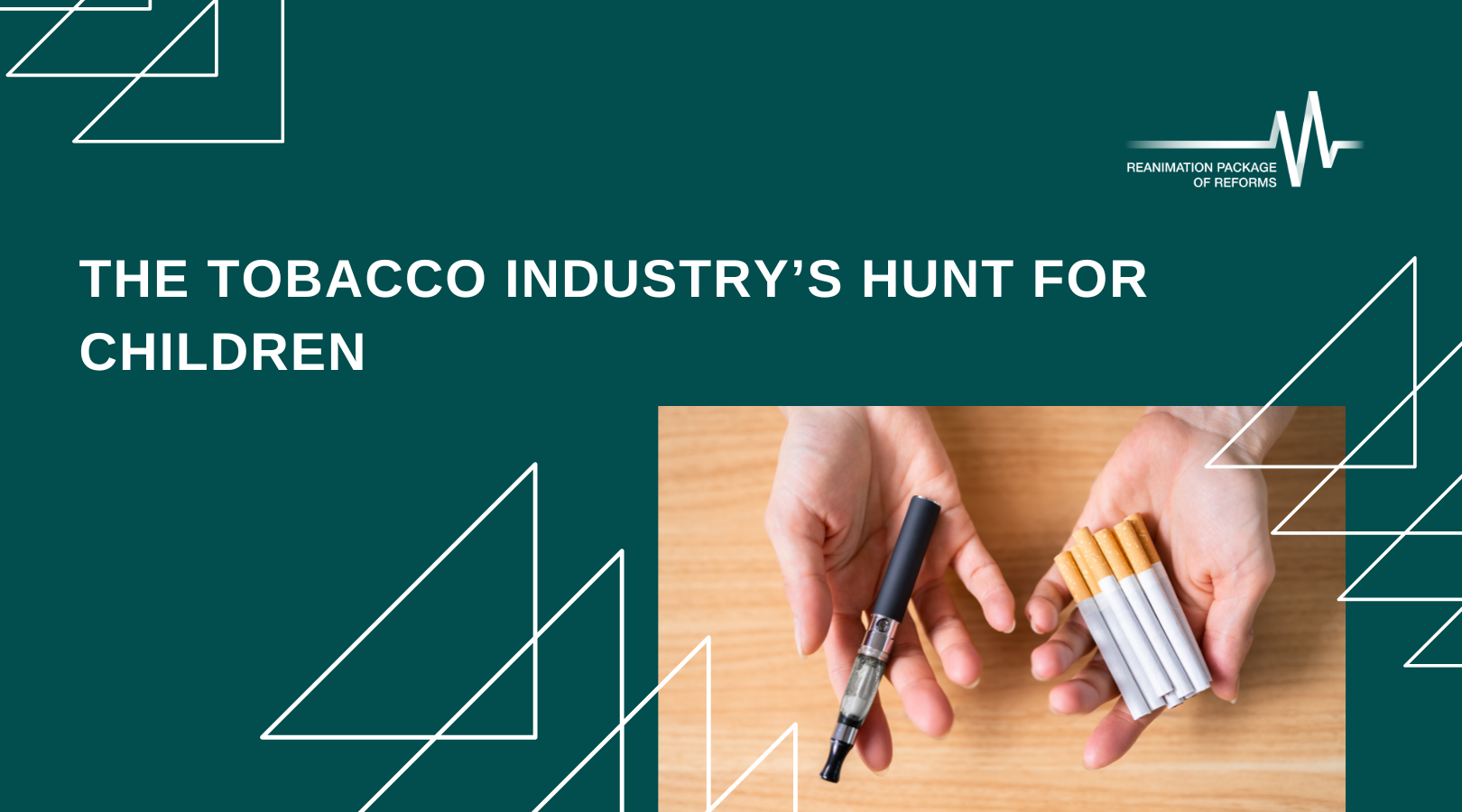
Today in Ukraine there is an epidemic of tobacco and nicotine product use among children. According to the Global Youth Tobacco Survey, among students aged 13–15: 18% use tobacco products, including 7% who use heated tobacco products, 20% smoke e-cigarettes, and 3% use nicotine snus.
This was reported by experts from the Center for Civic Representation “Life.” And today, September 1, the day Ukrainian children go back to school, is the right moment to again raise the question: what should be done about the tobacco industry’s hunt for youth?
The main driver of this epidemic is the aggressive promotion of tobacco and nicotine products by the tobacco industry. For this, it uses a wide range of marketing tools: flavorings, bright package designs, ads at bus stops, point-of-sale displays — often near schools. And, unfortunately, these methods work. Research shows that children who see tobacco displays in stores are 64% more likely to start smoking. In Ukraine, half of students aged 13–15 reported noticing such advertising at points of sale.
But the industry is not limited to traditional marketing. Today it is actively expanding into new channels — the internet, social media, streaming platforms, podcast hosting, even online games and the metaverse. According to Eurostat, 96% of young people aged 16–29 in the EU use the internet daily. That is why the online environment has become an ideal playground for luring children into nicotine use. This type of marketing is highly effective because it is interactive and often personalized.
According to a report by the Campaign for Tobacco-Free Kids, covering more than 60 countries, 40% of the audience engaged with PMI and BAT’s social media marketing content were young people under the age of 25.
“The tobacco industry changes its tools, but not its goal — to make children addicted to nicotine. That is why timely state intervention is essential,” emphasizes Olha Masna, leader of the initiative Parents for a Tobacco- and Nicotine-Free Ukraine.
In the Verkhovna Rada, draft law No. 12091 has been submitted to the Committee on National Health. It strengthens restrictions on the tobacco industry’s advertising tools: banning flavored tobacco products, retail displays, banner ads online, and introducing graphic health warnings on the packaging of all tobacco products. It must be adopted as soon as possible to protect children and youth from aggressive inducement into nicotine addiction.
Read the full article at the Center for Civic Representation “Life” website.


