Reanimation package of reforms > News > Events > Results of the Forum “Democracy in Ukraine and the World”
The third annual Forum “Democracy in Ukraine and the World” gathered leading Ukrainian and international intellectuals, politicians, civil society actors, and researchers to discuss the challenges facing democratic societies in the 2020s. This year’s discussions focused on protest and institutions, shared threats and internal consensus, civic responsibility and state capacity.
Amid the war, Ukraine is not only fighting for its own freedom but also defending global democratic values. Former Prime Minister of Ukraine (2014–2016) Arseniy Yatsenyuk emphasized: “Today, Ukrainians are defending not only their own country but global democracy. We have shown what true struggle for European values means — for fairness and justice. That is why Ukraine holds a central place in the global fight for democracy. The most powerful assault on European democracy began in 2014, when Vladimir Putin declared war on Ukraine. This war is an epochal event that will shape decades not only for Ukraine but also for the entire world.”
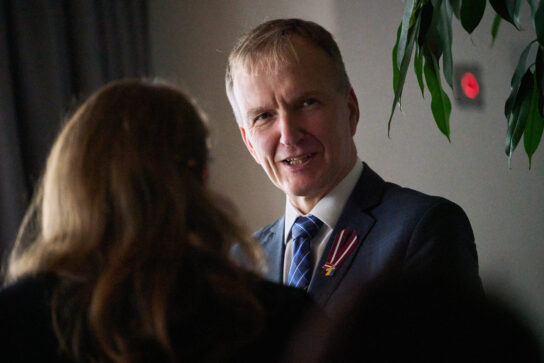
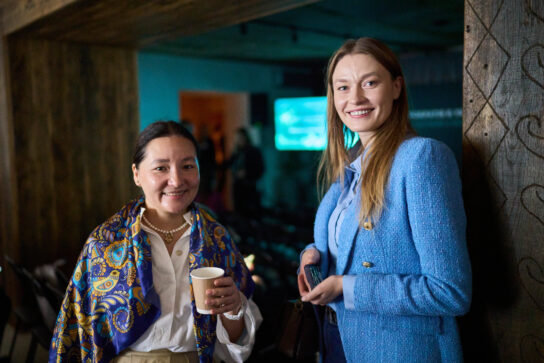
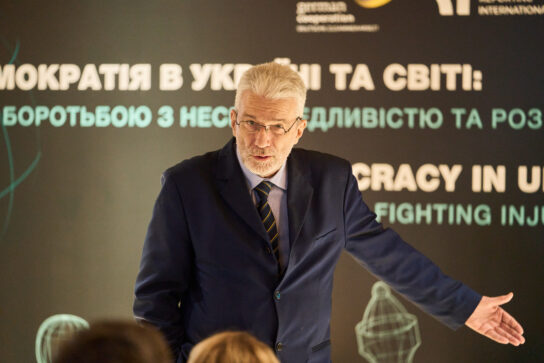
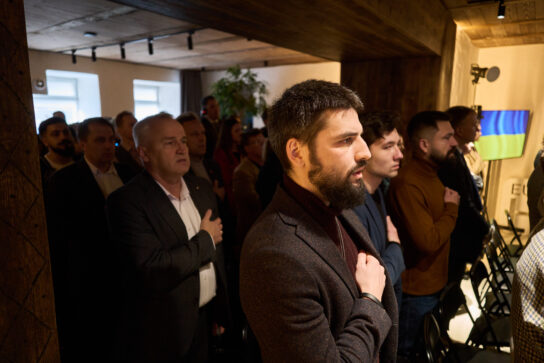
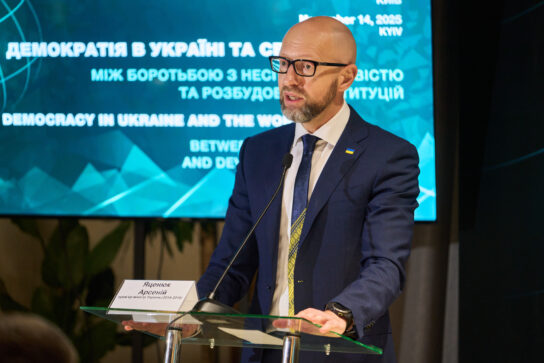
How will this war end? Can democracy withstand the pressure? And will democratic institutions find new allies in today’s world? Here are the key takeaways from the Forum.
In the 21st century, protests appear in various forms — as reactions to injustice, as resistance to outdated political structures. The Forum opened with a discussion on the nature of protest movements and their evolution over the past 30 years. “Protest is a reaction to dysfunctional state institutions. In Ukraine, certain triggers have always existed for the start of revolutions,” said Ihor Poshyvailo, Director of the Museum of the Revolution of Dignity and participant of the Revolution of Dignity. “The Revolution of Dignity happened because state mechanisms acted against people and their will. Ukrainians came to Maidan for European development and against state violence. People united both against injustice and dictatorship, and for rights, values, and freedom. This complex dualism is a defining feature of Ukrainian protests.”
Dmytro Koziatynskyi, veteran of the Russian–Ukrainian war and co-organizer of the 2025 summer protests, added:“Ukrainian protests are always pro-something. For appointing the head of the Economic Security Bureau, for preserving the independence of NABU, for Ukrainians’ right to live freely. Power is strong only until it begins sliding into authoritarianism. Whether we preserve democracy depends solely on civil society, which can hold the government accountable and ensure Ukraine stays on its democratic path.”
Yaryna Yasynevych, Program Lead at the Center for Research on the Liberation Movement and participant of the Orange Revolution, noted: “In Ukraine’s history, there have been no genuine protests to ‘defend the USSR or Russia’ — such initiatives were either orchestrated or quickly faded. This shows the societal consensus on Ukraine’s independent development. The Orange Revolution was prepared in advance; Euromaidan was not. But society learned the lesson: we must stay continuously engaged in political processes.”
Journalist and public figure Oles Doniy, participant of the Revolution on Granite, summed up: “There is a competition of myths, a competition of stories. Stories rule the world. And we are fortunate that we create ours brighter. The idea that democracy is driven by an active minority is a powerful myth we must continue developing.”
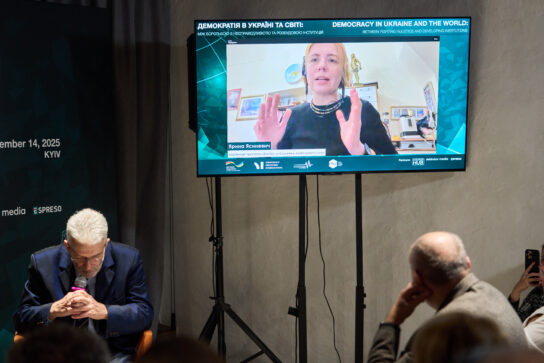
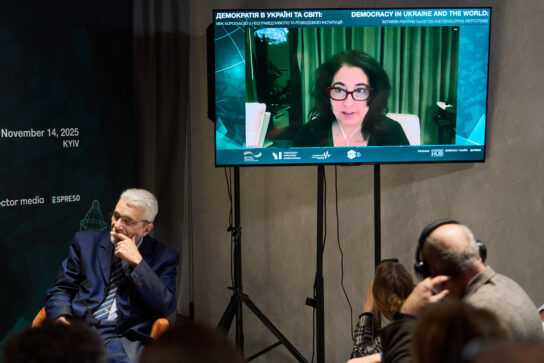
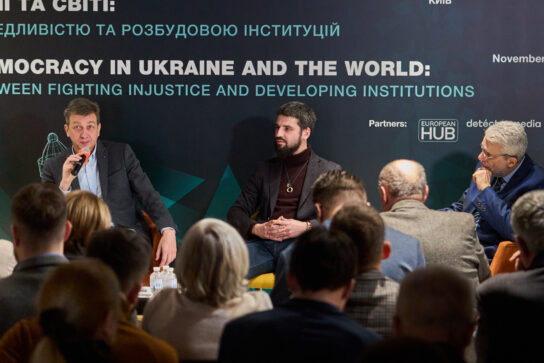
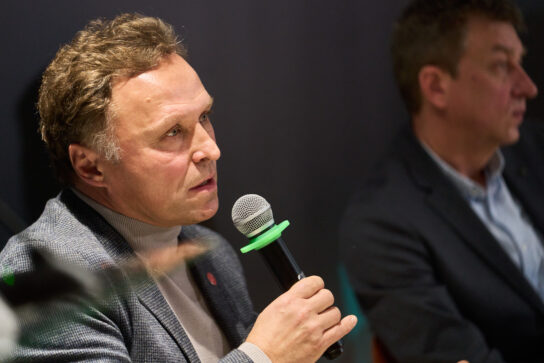
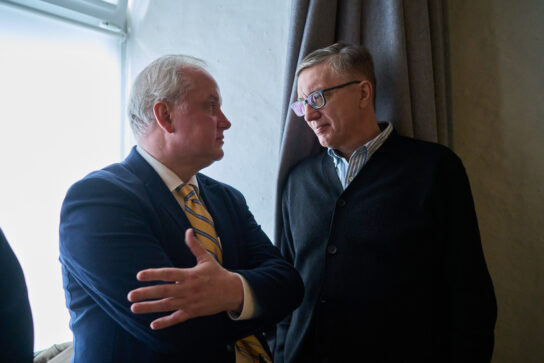
In Ukraine, protest has become a driving force of democratic change. Whether this holds true globally remains an open question.
The next discussion centered on state institutions, reform efforts, and the survival of democracy during wartime.
Many strong Ukrainian civil society organizations and think tanks were born out of revolutions. Over recent years, populism has seeped not only into the state but also into civil society. This was highlighted by Olha Lymar, Executive Director of the RPR Coalition: “As Ukraine and the world change, so does the demand for our work: we speak less about systemic reforms and long-term solutions and more about quick results. Populism — infantile and irresponsible — is penetrating the civic sector too. How well we adapt and preserve demand for democracy will determine our influence in these turbulent times — wartime for Ukraine, populism for the world, and a global confrontation with autocracies.”
Democracy is the foundation of society. Yet in wartime, when some of its instruments — such as elections — are not fully accessible, new forms must be found.
Pavlo Kazarin, journalist, serviceman of the Armed Forces of Ukraine, and Shevchenko Prize laureate, said: “The opposition to Yanukovych united two major groups: those who fought for freedom and those who wanted to preserve the nation. Despite different motives, a shared enemy united them. The same happened on February 24, 2022 — Russia became a unifying enemy. But are we destined for an eternal consensus between these groups? No. Today we hear calls for elections, open borders, an end to forced mobilization — for some, these demands sound like self-destruction. What happens if these groups again stand on opposite sides — figuratively, Maidan and Anti-Maidan? We see democracy as the foundation. But its foundation is consensus — and we don’t know how long it will last.”
Vitaliy Portnikov, journalist and political analyst, countered with optimism: “It is worth fighting for democracy — at least as a tool that restrains abuses. Without an anti-corruption system, we wouldn’t know about high-level wrongdoing. These institutions can exist only within a democracy. The alliance with democratic states exists — and it works. We must look for answers within democratic institutions, even during wartime.”
What, then, is happening with democracy globally? Has it truly failed?
Germanist, translator, and essayist Yurko Prokhasko discussed ressentiment as a source of resistance to democracy worldwide: “For decades, liberal democracy was the normative framework of modernity, and now it is in crisis. The perception of stagnation fuels ressentiment — the defining force behind the rise of authoritarianism, populism, and radicalization.”
Ultimately, all speakers agreed that Ukraine must become a frontline defender of democratic values. Oleksandr Yabchanka, civic activist and serviceman of the Armed Forces of Ukraine, concluded: “In past years, Ukrainian soldiers spoke with Europeans about values. Now the theme has shifted: we discuss Ukraine–EU interaction, where Ukraine as Europe’s shield becomes central.”
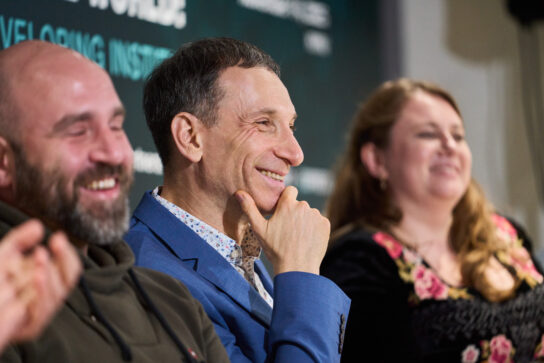
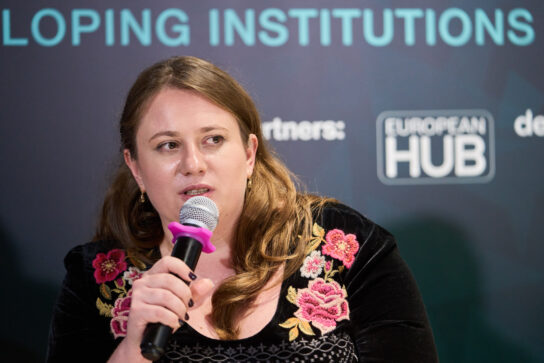
Preserving democracy is an existential question for Ukraine. This became clear in every discussion at this year’s Forum.
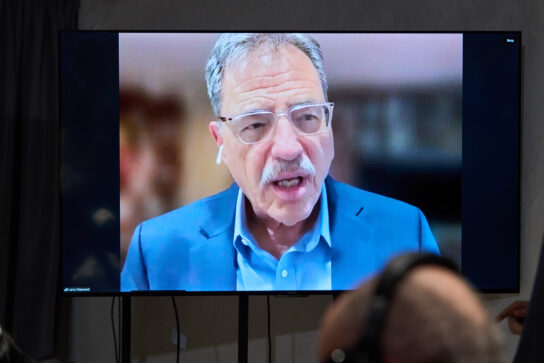
Political sociologist and Stanford professor Larry Diamond emphasized: “Ukraine is a democracy, and we increasingly understand the scale of the existential threat. Looking ahead to the postwar period, we must ask: how do we strengthen democracy? This is a global challenge we all share. Over 40 years of studying democracies, I’ve learned: the effectiveness of democracy determines its viability.”
DRI Ukraine Director Stanislav Liachynskyi added: “The functioning of democracy requires constant support — this is also reflected in the report on the state of democracy that we recently presented. Preserving democracy is crucial for Ukraine, especially in wartime.”
Indeed, discussions about the future of democracy or the confrontation between democratic and authoritarian paths are only possible in open, public spaces — not through state policy alone. Our future depends on today’s commitment to democratic principles.
Ihor Koliushko, Chair of the Board of the Centre of Policy and Legal Reform, concluded: “When reflecting on democracy and state institutions, I want to emphasize: the struggle for democracy and statehood will never become destructive if our society is grounded in a social contract centered on unity within Ukrainian society. It is essential that people speak about such a contract as a way of organizing civic life.”
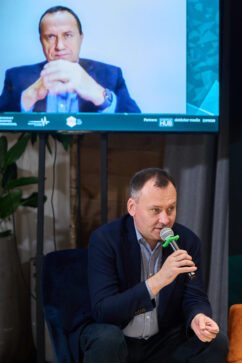
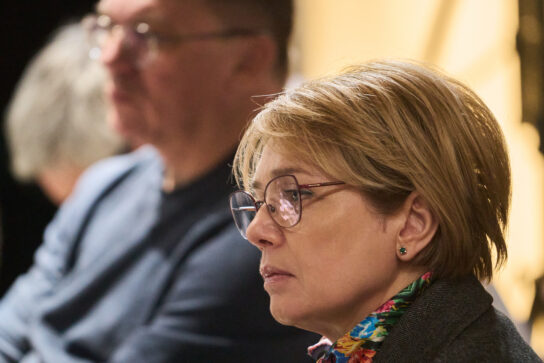
The conversation on democracy continues — and will return next year. For now, we call on everyone: live democracy, not only discuss it.
Find photos from the event at the link, and watch the full Forum livestream on our YouTube channel and Facebook.
This event was organized by the Reanimation Package of Reforms Coalition in partnership with Democracy Reporting International (DRI) and the Centre of Policy and Legal Reform, within the project “Democratic Integration, Resilience and Engagement” (Ukraine-DARE), implemented with the financial support of the Federal Foreign Office of Germany. The views expressed during the event do not necessarily reflect the position of the Federal Foreign Office of Germany.


