Reanimation package of reforms > News > Events > Results of the Conference “European Future of the Rights of Persons with Disabilities in Ukraine”
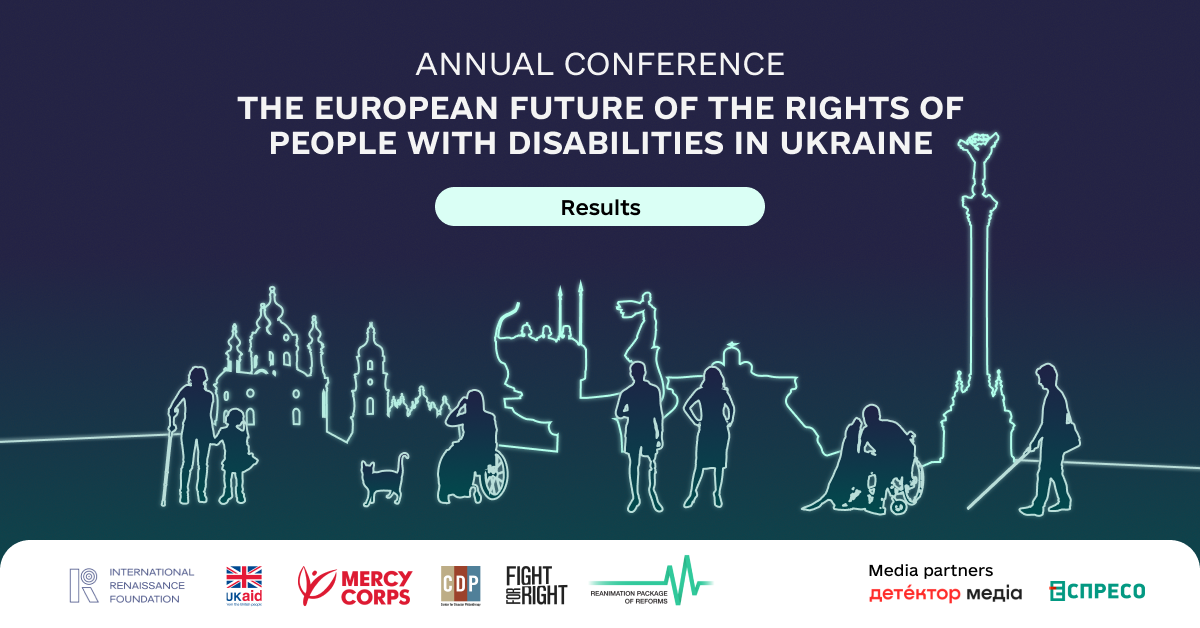
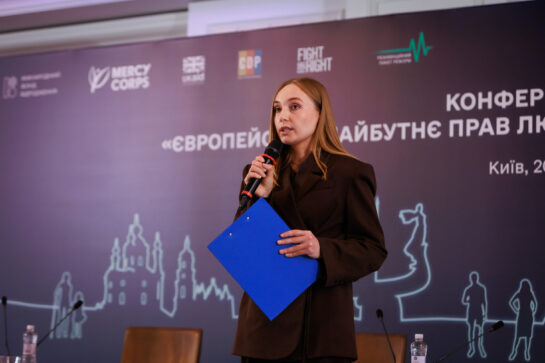
On 3 December 2025, Kyiv hosted the conference “European Future of the Rights of Persons with Disabilities in Ukraine.” The event was organised by the disability rights organisation Fight For Right and the Reanimation Package of Reforms Coalition (RPR) with the support of international partner organisations. Representatives of government, international partners, and civil society discussed how to integrate the rights of persons with disabilities into all stages of Ukraine’s EU integration and reconstruction.
Opening the conference, Yuliia Sachuk, Head of Fight For Right, noted: “Despite the war, we — people with disabilities — continue fighting for freedom and dignity. In 2021, Fight For Right and the RPR Coalition held this Conference for the first time so that persons with disabilities would have a platform to speak about what truly affects them. Over the past four years, we have achieved a great deal and engaged diverse partners. The fifth conference is a significant milestone for each of us and for the whole community.”
Olha Lymar, Executive Director of the RPR Coalition, emphasized: “Ukraine cannot join the EU without fulfilling the requirements for reforming disability rights. We often discuss these issues in the context of more ‘popular’ reforms — judicial or anti-corruption — but we always stress that EU membership is, first and foremost, about dignity and the rights of our citizens.”
From her side, Liudmyla Fursova, Advocacy Manager at Fight For Right, stressed that the state must engage organisations of persons with disabilities at the stage of developing decisions, not merely at the stage of presenting them. “We can truly offer better solutions because we have the experience and expertise. We are implementing deinstitutionalisation not for the EU, or the UN, or anyone else — but for our people. Today, we have a real opportunity to deinstitutionalise and free nearly 40,000 institutionalised individuals and restore their right to independent living.”
Martin Mühleck, Head of the Good Governance and Fundamental Rights Team at the Ukraine Service of the European Commission’s DG NEAR (DG ENEST), underscored the importance of including the Ukrainian disability community in EU-integration processes: “We fully recognise that Ukraine is in a very difficult situation due to Russia’s full-scale invasion. Yet we remain optimistic about the progress achieved in recent years, including improvements in raising legislative standards within the EU integration process.”
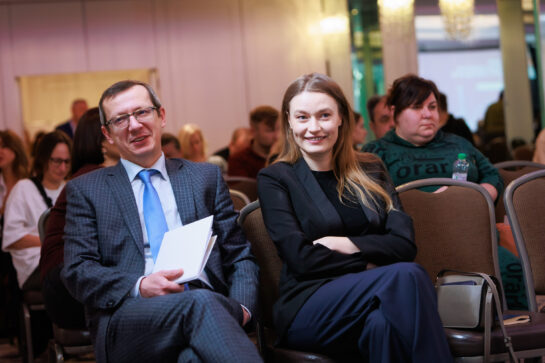
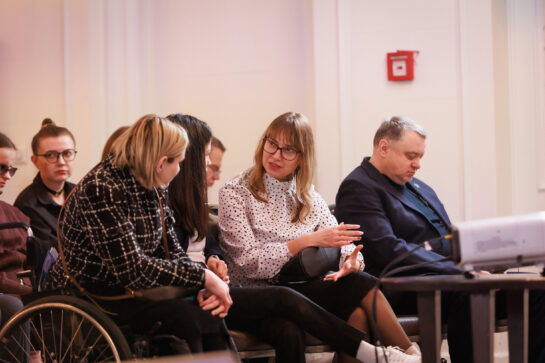
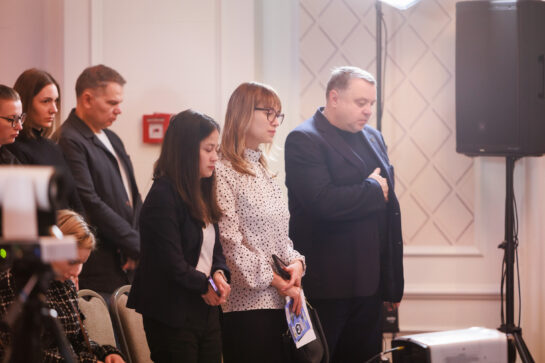
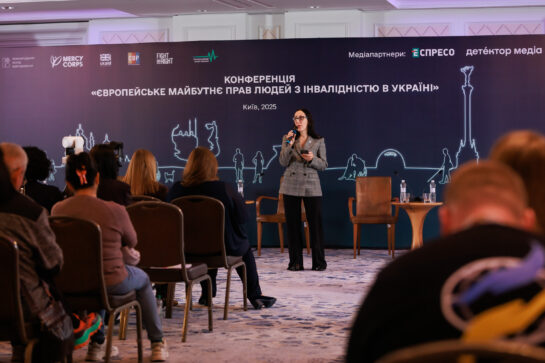
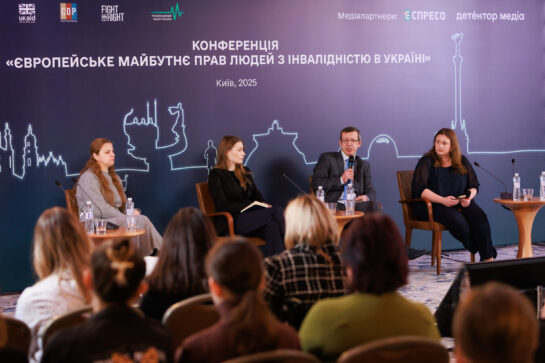
According to Inna Solodka, Deputy Minister of Social Policy, the answer is yes — and civil society plays a crucial role: “We are engaging active civil society so that they help us identify problems. We are absolutely moving in the right direction. We study international experience: what supported living facilities should look like, how long-term care should function, how social services should be delivered. The relevant standards have already been adopted.”
Oleksandr Ilkov, Director General of the Government Office for Coordination of European and Euro-Atlantic Integration, explained that the government is finalising the national programme for adapting Ukrainian legislation to EU law: “All provisions of EU law relating to the rights of persons with disabilities will become part of this national programme, with clear deadlines and designated responsible institutions.”


The conference also addressed the inclusion of veterans in community life, rehabilitation, and social services after returning to civilian life.
Ruslan Prykhodko, Deputy Minister for Veterans Affairs, stated: “Our Constitution declares the individual — their rights and freedoms — as the highest value. Our task is to ensure veteran-centred policy not only on paper in Kyiv, but in communities throughout the country. This is complex work. Today we are embedding provisions in legislation that break all ties to the outdated Soviet model.”
Perspectives on veteran rights were also shared by:
Tetiana Lomakina, Presidential Adviser on Barrier-Free Environment
Kateryna Pryimak, veteran, Head of the Women’s Veteran Movement
Dmytro Lufer, consultant to the Ministry of Health, expert of the REHAB4U project
Masi Nayyem, veteran, lawyer, co-founder of the Human Rights Centre “Pryntsyp”
The conference concluded with the press briefing “Five Wins and Failures of 2025 in the Sphere of Disability Rights.” More than 200 respondents noted that in 2025, the voice of persons with disabilities became louder. Organisations of persons with disabilities took part in more government working groups, humanitarian clusters, international events, and discussions — a major victory for the year. Thanks to the activism of civil society, disability rights are increasingly considered in policymaking and implementation.


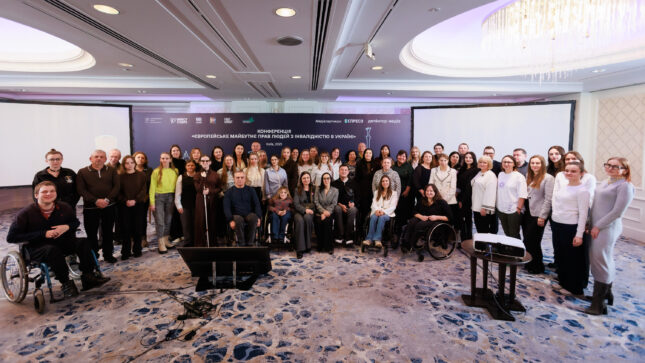
A symbolic highlight of the International Day of Persons with Disabilities was the “Lights for Rights” visibility action on Kyiv’s Independence Square, which gathered participants from across Ukraine.


The conference was organised by Fight For Right and the Reanimation Package of Reforms Coalition in partnership with Mercy Corps, with financial support from the UK Government, as well as the International Renaissance Foundation and the Center for Disaster Philanthropy.


