Reanimation package of reforms > News > Events > Public Administration Reform and Institutional Framework for Negotiations with the EU – Results of the Discussion
Next year, Ukraine is entering the next stage of European integration, which is more complex in terms of political, regulatory and technical aspects – work on ‘fundamentals’. The effectiveness of this stage will depend on whether the state is able to create an institutional structure for negotiations, namely special institutions and a system of coordination of authorities that will accompany the negotiation process. Public administration reform is an integral part of this process.
“The European integration process requires open and transparent work of the government, its close cooperation with parliamentary committees and avoidance of manipulations with draft laws,” said Ihor Koliushko, chairman of the board of the Center of Policy and Legal Reform.
On November 26, he took part in the public discussion “‘Fundamentals’ for Successful Accession Negotiations with the EU”, organized by the Ukrainian Centre for European Policy (UCEP), the Center for Policy and Legal Reform (CPLR) and the Reanimation Package of Reforms Coalition (RPR Coalition) with the support of the Konrad Adenauer Stiftung in Ukraine.
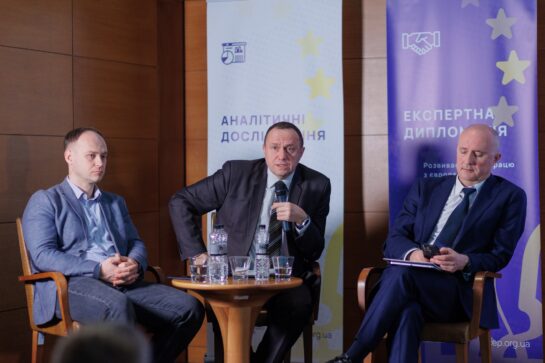

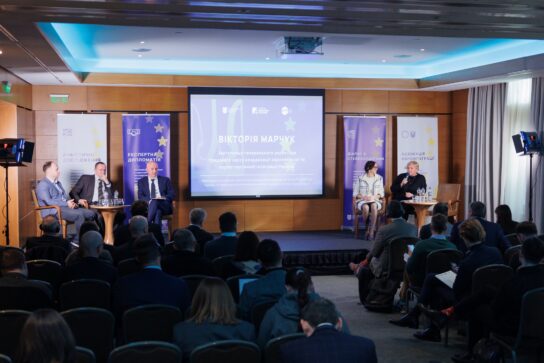
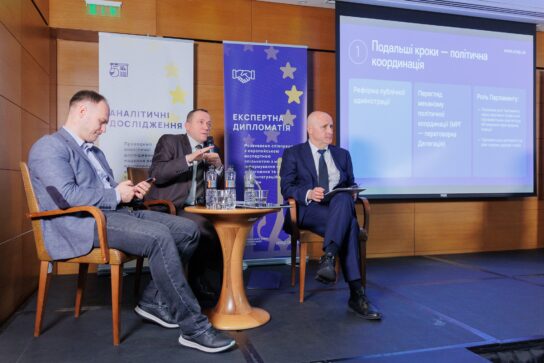
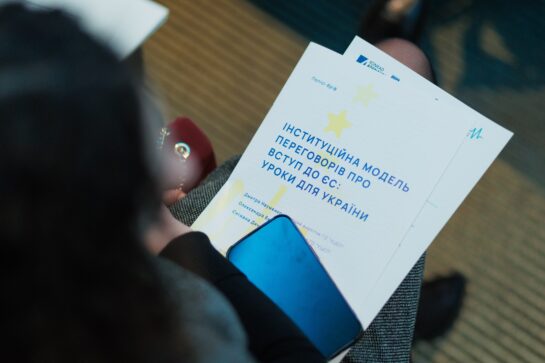
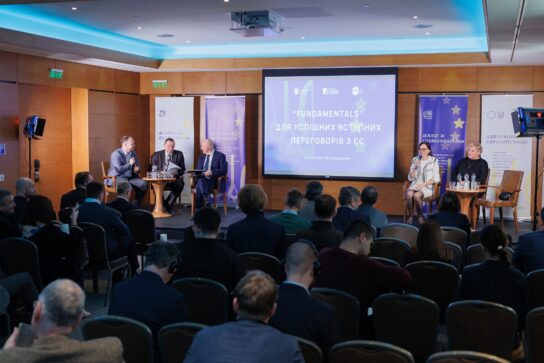
At the event, experts presented the key findings of the analytical report “Institutional Model of EU Accession Negotiations: Lessons for Ukraine”. In the study, the team of authors:
The authors came to the following conclusions:
“When it comes to any public policy, there is the concept of policy implementation and the concept of policy making. Policy implementation is the implementation of existing laws, and policy making is the change of laws to achieve a strategic goal in the future. And European integration is one of the components of policy making for the future,” said Ihor Koliushko.
Each ministry should focus on policy making and development of the area for which it is responsible in the context of European integration. Everything the government does in policy making should be transparent and open to the parliament, and ministries should work in close cooperation with the relevant parliamentary committees.
The event was organized by the Ukrainian Centre for European Policy (UCEP), the Centre of Policy and Legal Reform (CPLR) and the Reanimation Package of Reforms Coalition (RPR Coalition) with the support of the Konrad Adenauer Stiftung in Ukraine.


