Reanimation package of reforms > News > A large-scale forum “Democracy during the War: Ukraine’s Experience and Lessons for the World” has ended in Kyiv
33 speakers from Ukraine and the world, more than 200 participants in person and about 3000 viewers online – in the center of Kyiv, the Reanimation Package of Reforms Coalition in partnership with the Center for Policy and Legal Reforms and Democracy Reporting International (DRI) organized a platform for discussing democracy.
This year, the focus was on the lessons of Ukraine’s “fighting democracy,” relevant for both Ukraine and the world. Through three panel discussions, opening remarks, and two keynote addresses, the speakers and participants of the Forum explored the Euro-integration aspect of democracy, resistance to totalitarianism, and how civil society changes in wartime.
Democracy, War, and the EU
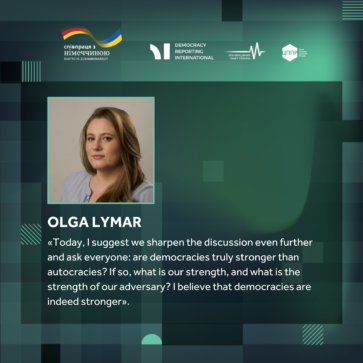
At the beginning of the event, Olga Lymar, Executive Director of the RPR Coalition, suggested sharpening the discussion: “Are democracies really stronger than autocracies? If so, where does our strength lie, and where does the enemy’s? I believe democracies are indeed stronger.”
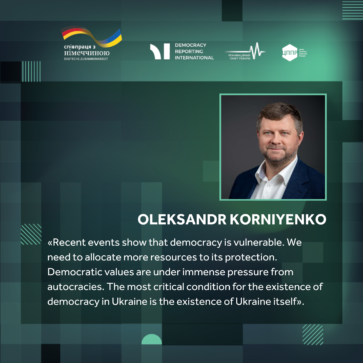
“Recent events show that democracy is vulnerable, and more resources need to be invested in its protection,” agreed Oleksandr Kornienko, First Deputy Chairman of Ukraine’s Parliament. He stated: “Democratic values are under intense pressure from autocracies. The most crucial condition for democracy in Ukraine is Ukraine’s existence.”
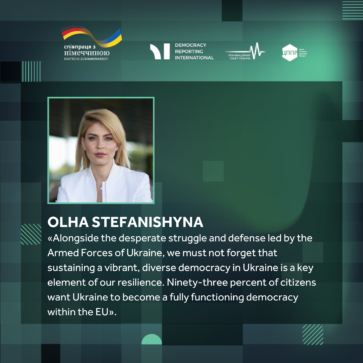
To ensure this, the Ukrainian Defense Forces are making tremendous efforts. Deputy Prime Minister for European and Euro-Atlantic Integration and Minister of Justice Olga Stefanishyna added, “Alongside the courageous fight and protection by the Armed Forces, we must remember that sustaining a vibrant, diverse democracy in Ukraine is a key element of our resilience. 93% of citizens want Ukraine to become a fully functioning democracy within the EU.”
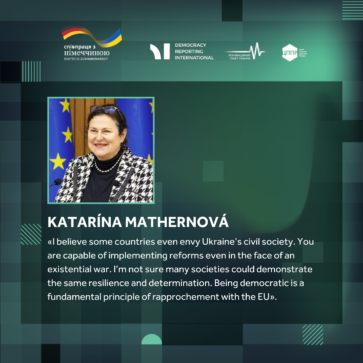
Euro-integration was a central theme in all Forum discussions. Just days prior, the European Commission released a report on Ukraine’s progress and priorities on its path to EU membership. Katarina Mathernova, the European Union’s Ambassador to Ukraine, emphasized, “It seems to me that some countries even envy Ukrainian civil society. You are able to implement reforms despite an existential war. I am not sure many societies would show such resilience and determination. Being democratic is the foundational principle for EU alignment.” Ambassador Mathernova stressed that coalitions like the Reanimation Package of Reforms are truly vital alliances, bringing together think tanks and a new post-Revolution of Dignity community.
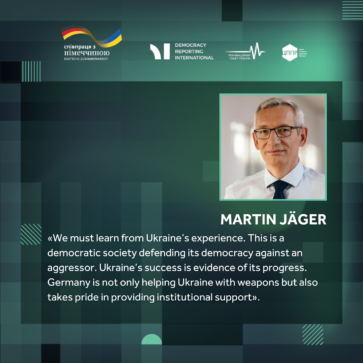
“We must learn from Ukraine’s experience,” agreed Martin Jäger, German Ambassador to Ukraine, adding, “This is a democratic society that is defending its democracy against an aggressor. Ukraine’s success is evidence that it is moving forward.”
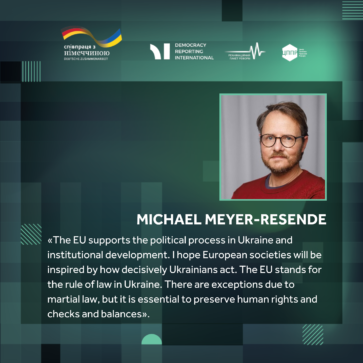
The importance of maintaining the democratic and Euro-integrative course even under martial law was highlighted by Michael Meyer-Resende, Executive Director of Democracy Reporting International: “The EU supports Ukraine’s political process and institutional development. I hope that European society will be inspired by the Ukrainians’ determination. The EU supports the rule of law in Ukraine. Human rights and checks and balances must be preserved.”
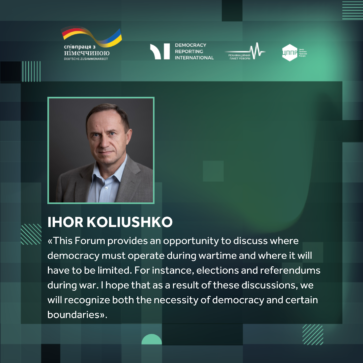
Ihor Koliushko, Chairman of the Board of the Centre for Policy and Legal Reforms, noted that the Forum serves as a platform for discussing where democracy must function during wartime and where it might need limits: “For example, elections or referendums during war. I hope that these discussions will help us recognize the necessity of democracy along with its certain boundaries.”
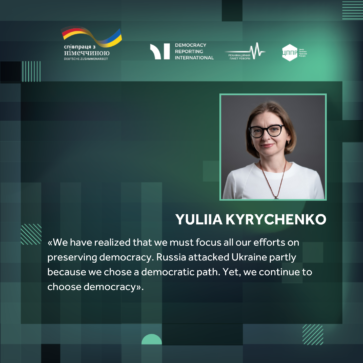
At the same time, it is essential to remember that despite everything, Ukraine continues to choose the democratic path. “We have realized that all our efforts must focus on preserving democracy. Russia attacked Ukraine partly because we chose democratic development. We do choose democracy,” assured Yulia Kyrychenko, Co-Chair of the RPR Coalition Council and Board Member of the Centre for Policy and Legal Reforms.
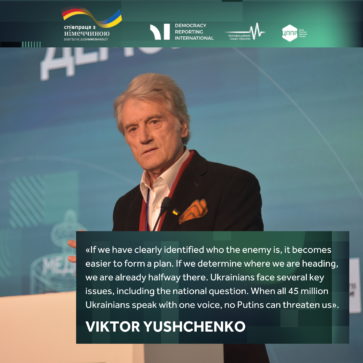
Before the panel discussions began, former Ukrainian President (2005–2010) Viktor Yushchenko delivered a keynote address at the Forum, summarizing the introductory remarks: “If we have clearly identified who the enemy is, it is easier to form a plan. If we know where we are heading, then we are already halfway there. Several issues are on the agenda for Ukrainians, including the national question. When all 45 million Ukrainians speak with one voice, no Putin is frightening.”
EU Values, Institutional Stability, and Martial Law
The first panel, “Democratic Rule of Law: EU Integration During and After the War,” continued the direction set in the opening remarks. Participants discussed Euro-integration in detail, as well as the meaning of freedom and democracy in Ukraine and the West. The discussion was moderated by Yuriy Mykytyuk, Head of Regional Programs and Deputy Head of the Advocacy and International Relations Department at the RPR Coalition.
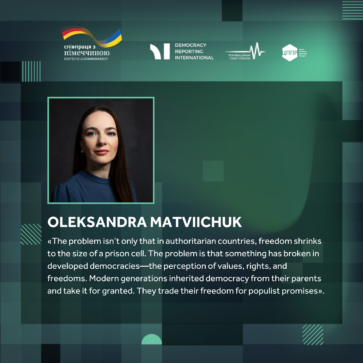
“The problem is not only that, in authoritarian countries, freedom is reduced to the size of a prison cell. The problem is that in developed democracies, something has broken—namely, the perception of human rights and freedoms. Today’s generations inherited democracy from their parents; they take it for granted and exchange their freedom for populist promises,” said Oleksandra Matviychuk, human rights defender and head of the Center for Civil Liberties, the first Ukrainian organization to receive a Nobel Prize.
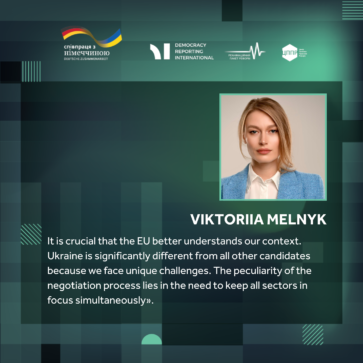
At the same time, it’s essential to recognize that Western societies are also adapting to new requirements for resisting authoritarian regimes. This is evident in the ongoing Ukraine-EU negotiation process. “It’s important that the EU now has a better understanding of our context. Ukraine is very different from other candidates because we face unique challenges,” noted Viktoriia Melnyk, coordinator of the “European Integration” program at the Center for Policy and Legal Reforms.
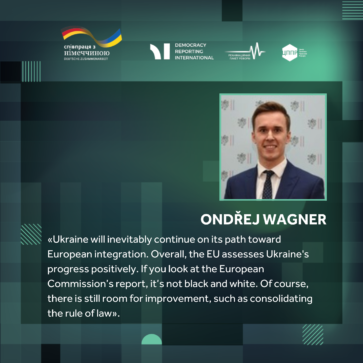
Ondřej Wagner, Acting Head of the Political Section of the EU Delegation to Ukraine, pointed to the European Commission’s report: “Ukraine is unavoidably on the path toward European integration. Overall, the EU views Ukraine’s progress positively. If you look at the European Commission’s report, it’s not black and white. There is still room for improvement, particularly regarding rule of law consolidation.”
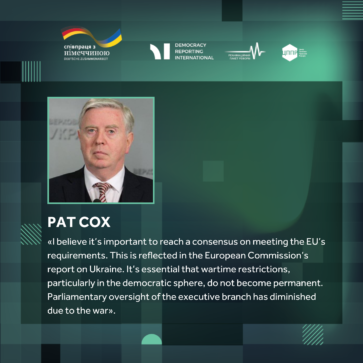
Pat Cox, former President of the European Parliament, also emphasized the importance of strengthening the rule of law and oversight between branches of power: “It is crucial that war-related restrictions, especially in the democratic sphere, do not become permanent. Parliamentary oversight of the executive branch has weakened due to the war.”
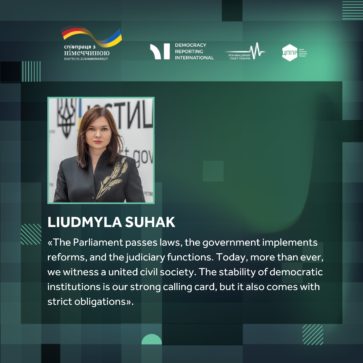
According to Liudmyla Suhak, Deputy Minister of Justice for European Integration, today society is more united than ever on all levels: “Parliament passes laws, the government implements reforms, and the judiciary is operational. Stability of democratic institutions is our solid asset, as well as a strict commitment.”
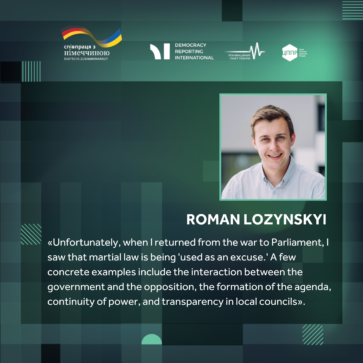
Meanwhile, Member of Parliament Roman Lozynskyi remarked: “Unfortunately, when I returned from the front to parliament, I noticed that martial law was being used as a cover. Specific examples include the interaction between the government and opposition, setting the agenda, continuity of governance, and transparency in local councils.”
All participants in the discussion agreed that Ukraine needs to not only safeguard its democratic achievements from the EU negotiation process but also to enhance areas temporarily restricted due to martial law. This can only be achieved through dialogue and consensus at all levels.
The Narrative of Ukraine and the “Iron Curtain” of Democracy
In the second panel, “At the Crossroads of Democracy? Global Resilience,” moderated by Maksym Yakovlev, Director of the School of Political Analytics, participants focused on narratives surrounding Ukraine and its democracy on the global stage. They also questioned whether democratic regimes truly have the upper hand over autocracies today.
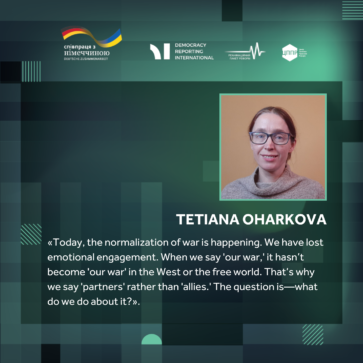
Tetiana Oharkova, literary scholar, essayist, and journalist, was unequivocal: “Today, there is a normalization of war. We’ve lost emotional engagement. When we say ‘our war,’ it hasn’t resonated as such in the West, in the free world. This is why we talk about ‘partners,’ not ‘allies.’ The question is, what do we do about it?”
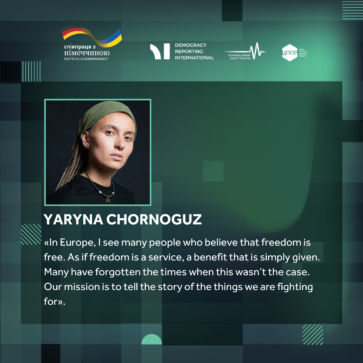
Writer and military service member Yaryna Chornoguz continued Oleksandra Matviichuk’s thought from the previous panel: “In Europe, I see that many people believe that freedom is free, as if freedom is a service simply given to you. Many people have forgotten when this was not the case. And it’s our mission to tell them about what we’re fighting for.”
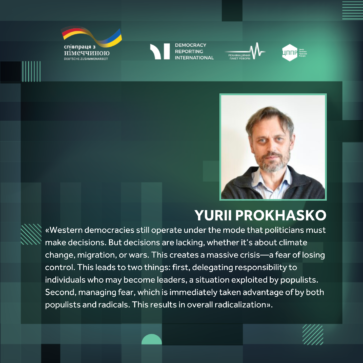
“Western democracies still operate on the premise that politicians must make decisions, yet there is often no action on issues like climate change, migration, and wars. This creates a massive crisis — the fear of losing control. It leads to two outcomes. First, delegating responsibility to individuals who could become leaders, which populists exploit. Second, the management of fear, which both populists and radicals use, leading to increased radicalization overall,” explained writer and psychoanalyst Yuriy Prokhasko regarding current processes in the West.
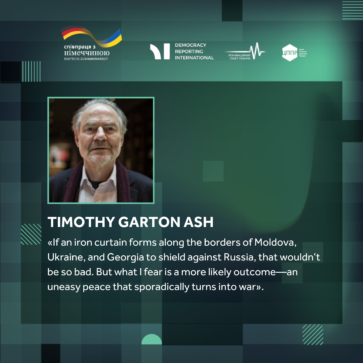
The key question around which the discussion focused was how and what to communicate to ensure Western democracies not only continue supporting Ukraine but also actively engage in fighting Russian authoritarianism. Historian, writer, and Professor of European Studies at the University of Oxford Timothy Garton Ash shared: “If the Iron Curtain will be at the border of Moldova, Ukraine, Georgia, protecting against Russia — it wouldn’t be the worst outcome. What I fear is a more likely scenario: an unstable peace that periodically erupts into war.”
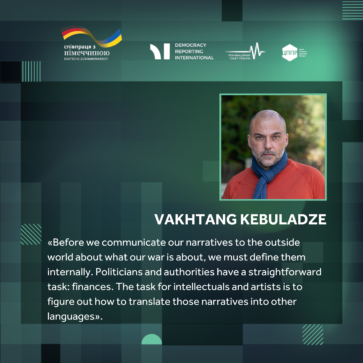
What should our narratives be? “Before we communicate our narratives abroad, we need to clarify internally what our war is about,” said Vakhtang Kebuladze, Professor of Theoretical and Practical Philosophy at Taras Shevchenko National University. “For politicians and officials, the task is simple: funds. For intellectuals and artists, the mission is to translate these narratives into other languages.”
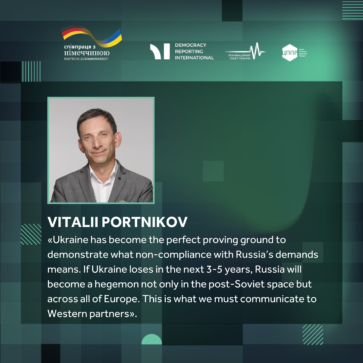
Publicist, writer, and journalist Vitalii Portnikov summed up Ukraine’s message as follows: “Ukraine has become the ideal ground to demonstrate what it means not to comply with Russian demands. If Ukraine loses in the next 3-5 years, Russia will become the hegemon not only in the post-Soviet space but also in Europe. This is what we need to communicate to our Western partners.”
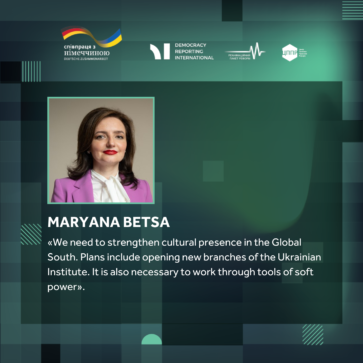
Beyond narratives, the discussion touched on engaging new audiences. Mariiana Betsa, Deputy Minister of Foreign Affairs of Ukraine, stressed the need to expand influence on the global stage, particularly intellectual influence: “We need to strengthen our cultural presence in the Global South. We plan to open new branches of the Ukrainian Institute. We must also use soft power tools.”
Despite Russia’s extensive resources invested in information warfare, Ukraine must remain committed to articulating, promoting, and supporting its key narrative: Ukraine’s resistance is the democratic world’s resistance to autocracies.
Democratic Society, Historical Reinterpretation, and the “Rule of Rules”
The third panel, “Resilience and the Future of Democracy: Transforming Ukrainian Society,” focused on Ukraine’s broader societal progress within a democratic context. Journalist and moderator Andrii Kulykov led the discussion, which saw diverse perspectives.
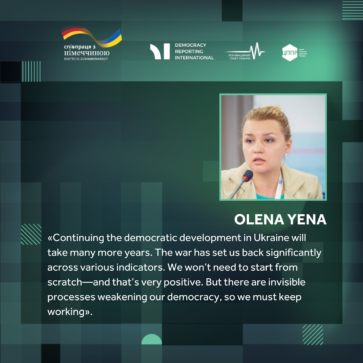
Olena Yena, Senior Director of Programs for Political Parties, Parliamentary, and Women’s Leadership at the National Democratic Institute in Ukraine, stated: “It will take us many years to continue building democracy in Ukraine. The war has set us back on many fronts. Fortunately, we don’t have to start over, but there are invisible processes that weaken our democracy, so we must keep working.”
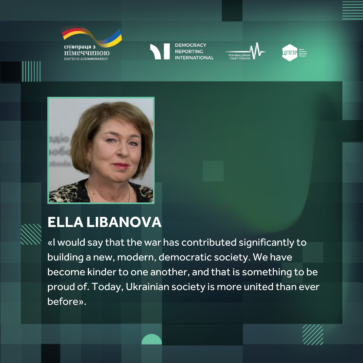
Conversely, Ella Libanova, academician at the National Academy of Sciences of Ukraine and Director of the Institute of Demography and Social Research, remarked: “I would say the war has significantly contributed to building a new, modern, democratic society. We have become kinder to people, which is something to be proud of. Today, Ukrainian society is more united than ever.”
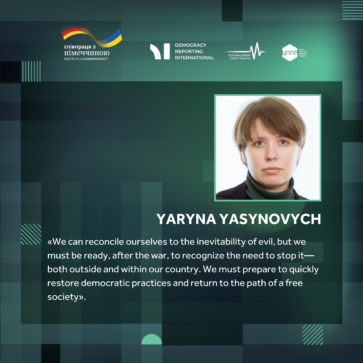
Despite everything, we must be prepared to swiftly restore democratic processes in Ukraine after the war. Yaryna Yasynevych, a member of the Reanimation Package of Reforms Coalition Council and head of programs at the Center for Research on the Liberation Movement, is confident of this: “We can come to terms with the inevitability of evil, but after the war, we must be ready to understand that it needs to be stopped. And within our own country. We need to be prepared to restore democratic practices as quickly as possible and return to a way of life rooted in a free society.”
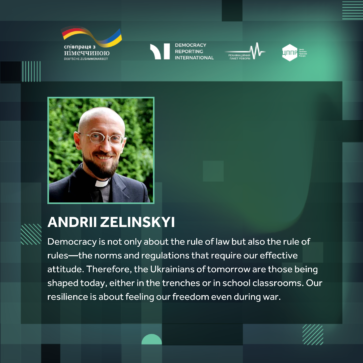
How can we restore democracy within our society? “Democracy is not only the rule of law but also the rule of rules; that is, norms and rules that require our committed attitudes for effectiveness. Therefore, the Ukrainians of tomorrow are being shaped today, whether in the trenches or at school desks. Our resilience is about feeling our freedom, even in the conditions of war,” said Andriy Zelinskyy, military chaplain of the Ukrainian Greek Catholic Church, political scientist, lecturer at the Ukrainian Catholic University, and writer.
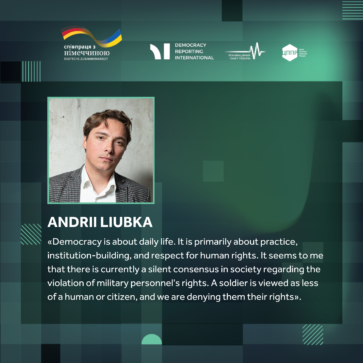
Writer and director of the Central European Strategy Institute, Andriy Lyubka, also emphasized the importance of attitudes toward democracy today: “Democracy is an everyday thing. It is, above all, a practice, institution-building, and respect for human rights. And it seems to me that there is a silent consensus in society now regarding violations of military personnel’s rights. There is this notion that if someone is a soldier, they are somehow not a person, not a citizen, and we deny them their rights.”
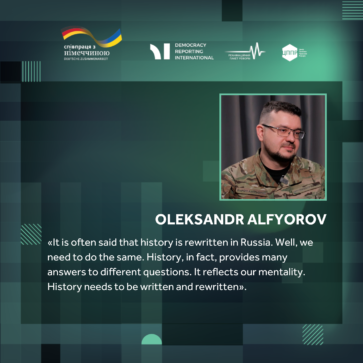
One aspect of working with democracy today could be reflecting on our history, as our approach to perceiving history will influence the formation of the Ukrainian mentality tomorrow. Oleksandr Alferov, historian, officer of the Armed Forces of Ukraine, and researcher at the Institute of History of Ukraine at the National Academy of Sciences of Ukraine, believes: “People often say that Russia rewrites history. Well, we need to do this too. History actually provides many answers to various questions. History is about our mentality. History needs to be written, and it needs to be rewritten.”
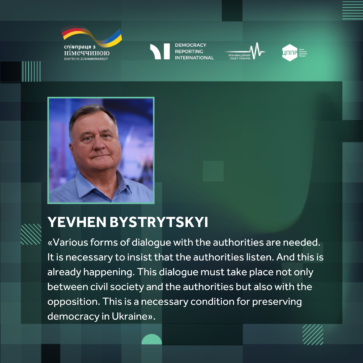
Throughout all these processes, it’s important not to lose sight of dialogue with the government, as summed up by philosopher and editor Yevhen Bystrytsky: “We need different forms of dialogue with the authorities. We must insist that the government listens. And this is already happening. This dialogue should not only be between civil society and the government but also with the opposition. This is essential for preserving democracy in Ukraine.”
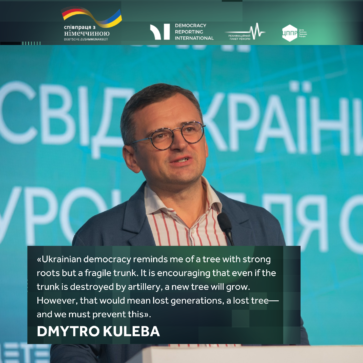
Minister of Foreign Affairs (2020-2024) Dmytro Kuleba concluded the forum, summarizing the discussions: “Thank you to the Reanimation Package of Reforms Coalition for these ten years. I am immensely grateful and value everything you have done. Ukrainian democracy reminds me of a tree with strong roots but a fragile trunk. It is comforting to know that even if the trunk is cut down, a new tree will grow. But this means lost generations, a lost tree — we must prevent this.”
The forum serves as a platform to coordinate and ensure that the tree of democracy continues to grow. It has become an annual event for all sectors and stakeholders of Ukrainian society. Together, we continue to drive change for the sake of preserving democracy!
Watch recordings of the Forum in Ukrainian on Facebook and in English on the Reanimation Package of Reforms Coalition’s YouTube channel. Find event photos in the album — share and tag our pages on social media.
The event was organized by the Reanimation Package of Reforms Coalition in partnership with the Center for Policy and Legal Reforms and Democracy Reporting International (DRI) within the project “Democratic Integration, Resilience, and Engagement” (Ukraine-DARE), implemented with financial support from the German Federal Foreign Office. The opinions and views expressed during the event do not necessarily reflect the position of the German Federal Foreign Office.


