Reanimation package of reforms > News > Infographics > Amendments to the Constitution Regarding Judiciary and Anticorruption Courts: Mission Possible?

On Thursday, May, 26 RPR in cooperation with Transparency International Ukraine held a reforms-breakfast for international and Ukrainian journalists, representatives of the embassies and international institutions in order to talk openly about the current state of the constitutional process, the possible voting for the amendments to the Constitution (hereinafter the “Amendments”) the next plenary week and the proposed model for the specialized anticorruption court.
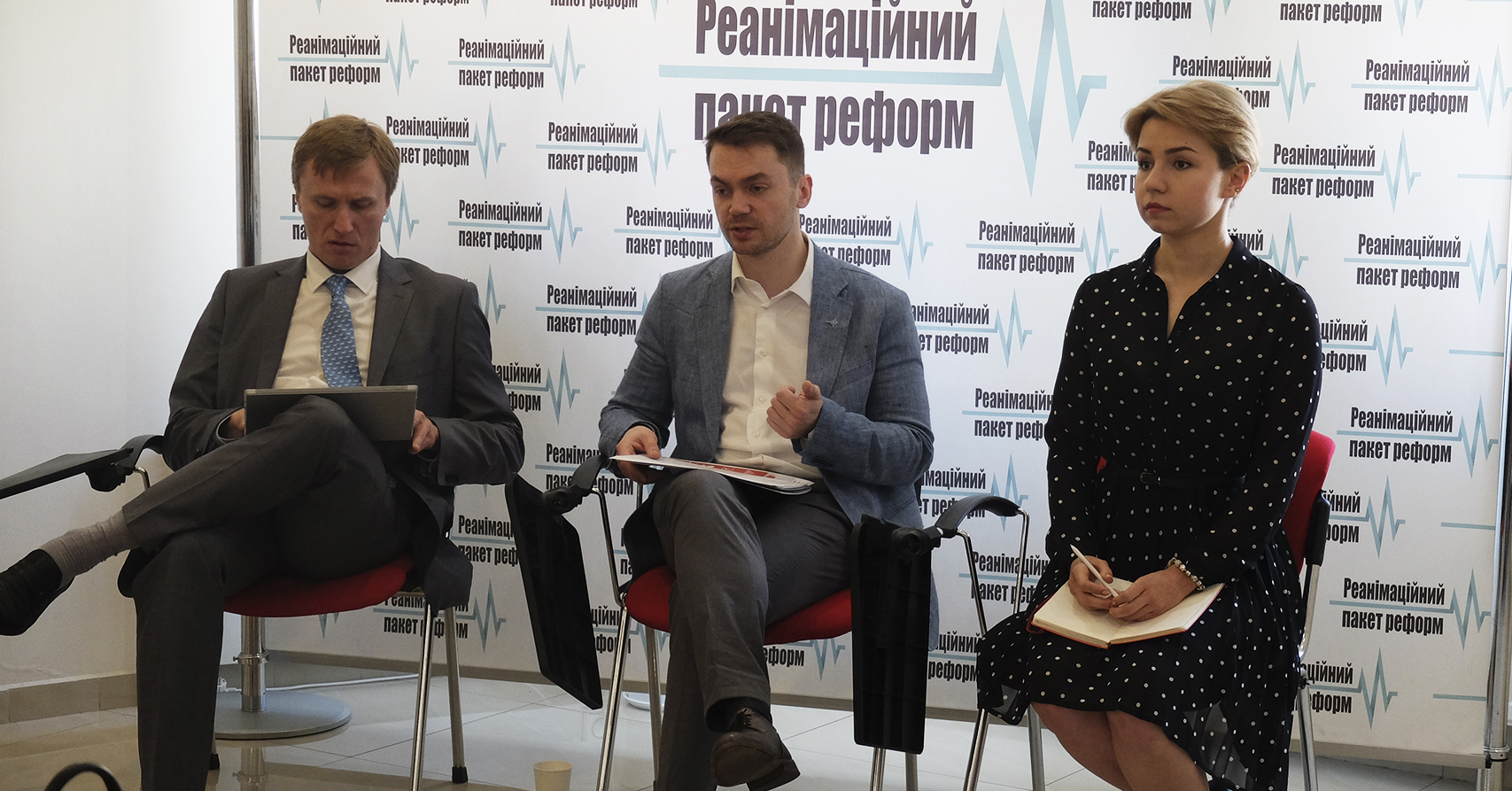
Speakers of the event were Anastasia Krasnosilska – Advocacy officer for Anticorruption Action Center; Mykhailo Zhernakov – leading expert on judicial reform of Reanimation Package of Reforms, former judge and Timur Bondaryev – managing partner of Arzinger law firm and Board Member of Transparency International Ukraine.
Considering information that Verkhovna Rada may vote for the Amendments next week on Thursday, May 2, Mykhailo Zhernakov has noted that that it would be a big step forward in the reform of the judicial system that reflects public expectations. At the same time, he pointed out that it is not enough to only adopt the Amendments without the respective implementation laws.
Implementation laws should include provisions on how the renewal of the judiciary is carried out, how the new Supreme Court is created and appelate courts reorganized, as well as guarantee transparent competitive selection of the new judges. Also, the laws concerning the Bar, legal education and access to legal profession and the prosecution reform should be voted,
– Mykhailo Zhernakov pointed out.
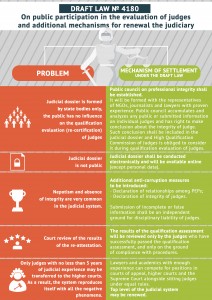
Beside this, Mykhailo Zhernakov mentioned the draft Law #4180 registered in Verkhovna Rada which provides for the effective mechanisms to carry out the reform of the judiciary if the Amendments do not pass.
Timur Bondaryev, added that we may talk about a lot of things, but we can’t avoid making judicial reform happen.

The economic problems are also raised because of absence of the renewed judicial system and independent judges”,
– he noted.
Other key issue that was raised for the discussion was specialized Anticorruption court. Anastasia Krasnosilska raised three main questions concerning it:
Commenting this, she stressed that the success of the new anticorruption institutions now depends on courts. In case the new institutionally independent Anticorruption court is not established in a short time, the NABU activity will have political attacks regarding their incapability to stop corruption. It has been noted that Anticorruption court system should consist of High Anticorruption Court at the first instance and separate chamber in the Supreme Court as the second. It is aslo possible to create such courts as separate independent chambers in the existing courts under current Constitution.
To ensure the independence and integrity of the anticorruption judges a special procedure of the selection and appointment for both instances through an ad hoc commission should be established. The commission would consist of 3 members appointed by the President, 3 members appointed by the Verkhovna Rada and 4 more members appointed by the Ministry of Justice. The latter should be approved by the international stakeholders such as EU delegation and U.S. Embassy. In order to avoid any political influence and to assure public control there should be 7 votes FOR in order to go on with the appointment of judge, thus ensuring that the members trusted by the international stakeholders and civil society have the blocking minority. Also both High Qualification Commission of Judges and High Council of Justice should be able only to approve the candidates selected by the commission.

Timur Bondaryev, was more skeptical on this issue mentioning that if the model of the Anticorruption court is successful, it will have a high chance to be blocked by the President and Verkhovna Rada. Thus, a lot depends on how we develop the legislation and pave the advocacy ground for such decisions to move along.
Summarizing the reforms-breakfast discussion on Amendments to the Constitution regarding Judiciary and Anticorruption Courts, Mykhailo Zhernakov pointed out that only having the public and international support voiced strongly enough it is possible to make real judicial reform happen starting this summer.


